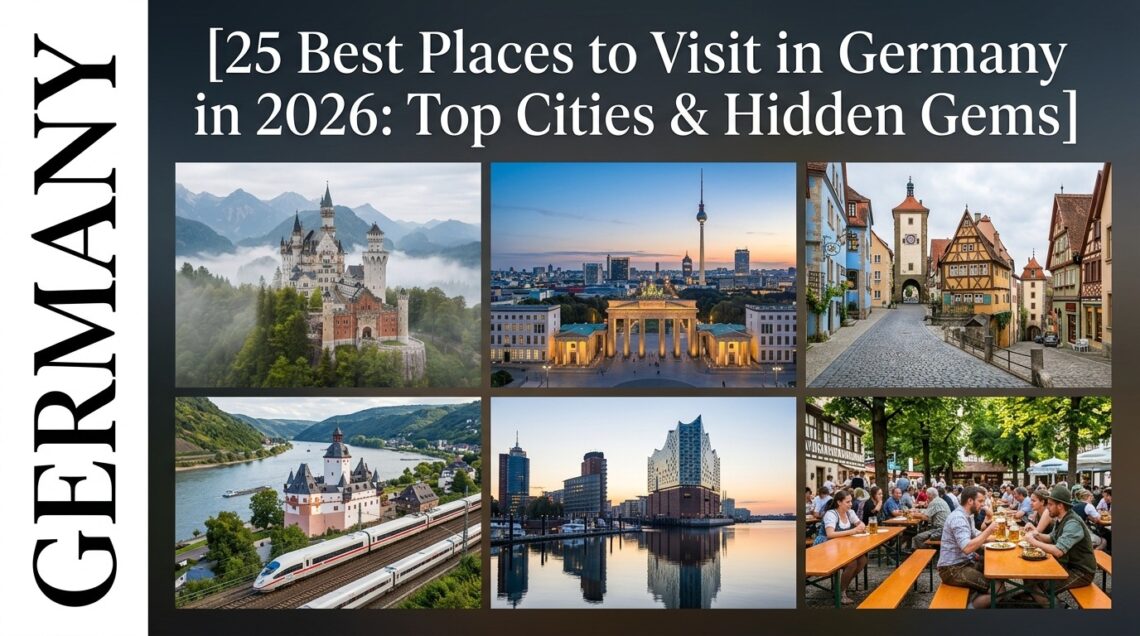
Germany has a way of surprising you. One day you’re wandering through a medieval old town, and the next you’re standing beneath a soaring cathedral or hiking through the Black Forest. That’s the magic of this country. If you’re searching for the best places to visit in Germany, you’re in the right spot.
This guide covers 25 destinations worth your time in 2026. We’ll walk through famous cities, romantic castles, and quiet towns most tourists never find. Whether you love history, nature, or good food, Germany delivers. Let’s dive in.
Why Germany Should Be Your Top Destination in 2026
Germany sits at the heart of Europe, which makes it easy to explore. You can hop on a train and reach another country within hours. Meanwhile, the country itself offers incredible variety.
Additionally, 2026 is shaping up to be a great year to visit. New high-speed rail routes are making travel faster. Many cities are also investing in tourism infrastructure. As a result, getting around has never been simpler.
Best Time to Visit Germany
The shoulder seasons, spring and fall, tend to offer the best weather. Temperatures stay mild, and crowds are smaller. However, summer remains popular for outdoor festivals and long daylight hours.
Winter has its own charm too. Christmas markets transform town squares into magical wonderlands. For instance, cities like Nuremberg and Dresden host some of the most famous markets in Europe.
Getting Around Germany
Germany’s train system, the Deutsche Bahn, connects nearly every city and town. Therefore, renting a car isn’t always necessary. Still, a car gives you freedom to explore rural areas and small villages.
Buses and regional trains fill in the gaps where high-speed rail doesn’t reach. Overall, public transport in Germany is reliable and easy to use, even for first-time visitors.
Berlin – Germany’s Vibrant Capital
Berlin is often the first stop for travelers, and for good reason. The city blends history, art, and nightlife like nowhere else. Consequently, it tops nearly every list of best places to visit in Germany.
Top Attractions in Berlin
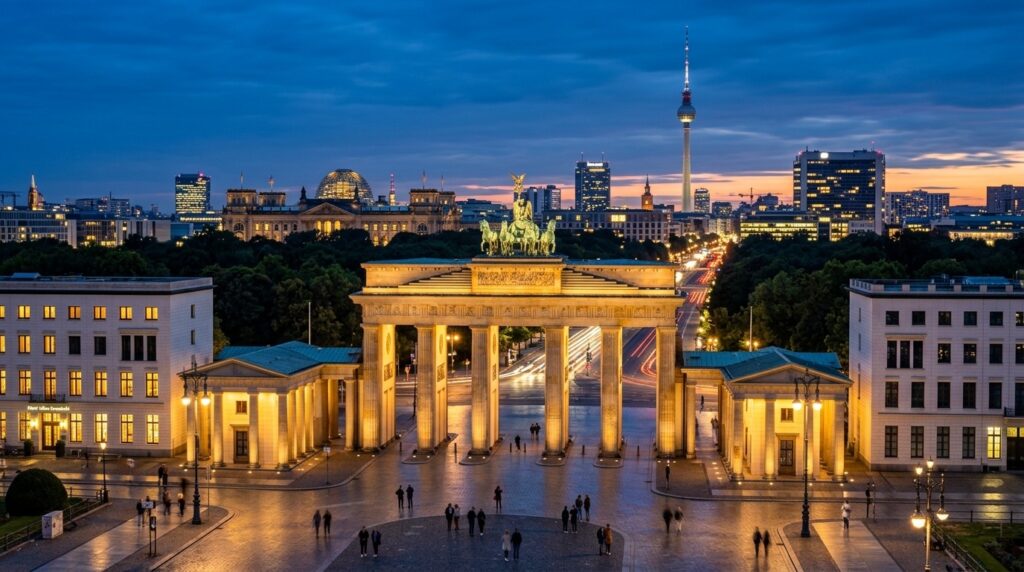
The Brandenburg Gate stands as the city’s most iconic symbol. Nearby, the Reichstag building offers a glass dome with panoramic views. Similarly, the Berlin Wall Memorial gives visitors a sobering look at recent history.
Museum Island houses five world-class museums in one compact area. If you only have one day, this is where you should spend it.
Neighborhoods to Explore
Kreuzberg buzzes with street art, cafes, and a multicultural vibe. In contrast, Mitte feels polished and central, packed with shops and landmarks. Meanwhile, Prenzlauer Berg offers a quieter, residential charm with beautiful architecture.
Munich – Bavarian Charm and Tradition
Munich mixes big-city energy with old-world Bavarian tradition. It’s home to Oktoberfest, but there’s far more to see here year-round.
Must-See Sites in Munich
Marienplatz, the city’s main square, features the stunning Neues Rathaus town hall. Every day, its glockenspiel clock puts on a small show for visitors. Nearby, the English Garden offers one of the largest urban parks in the world.
Nymphenburg Palace is another highlight, with sprawling gardens and royal history. For instance, you can spend an entire afternoon just exploring the grounds.
Day Trips From Munich
Dachau Memorial Site sits just outside the city and offers an important, if heavy, historical visit. On the other hand, the town of Fussen makes a lighter day trip, especially if you’re heading toward Neuschwanstein Castle.
Hamburg – Germany’s Maritime Gem
Hamburg feels different from the rest of Germany. As a major port city, it has a distinct maritime energy. Furthermore, it’s often overlooked, which makes it feel less touristy.
Harbor and Speicherstadt
The Speicherstadt district is the largest warehouse complex in the world. Its red-brick buildings and canals create a unique, almost Venetian atmosphere. Additionally, the Elbphilharmonie concert hall nearby has become an architectural icon.
Nightlife and Culture
The Reeperbahn is Hamburg’s famous entertainment district. It’s lively, loud, and full of bars and music venues. For a calmer experience, the Fischmarkt offers a fun Sunday morning tradition with food and local vendors.
Cologne – Home to a Gothic Masterpiece
Cologne, or Koln in German, is instantly recognizable thanks to one landmark. However, the city has plenty more beyond its famous cathedral.
Cologne Cathedral
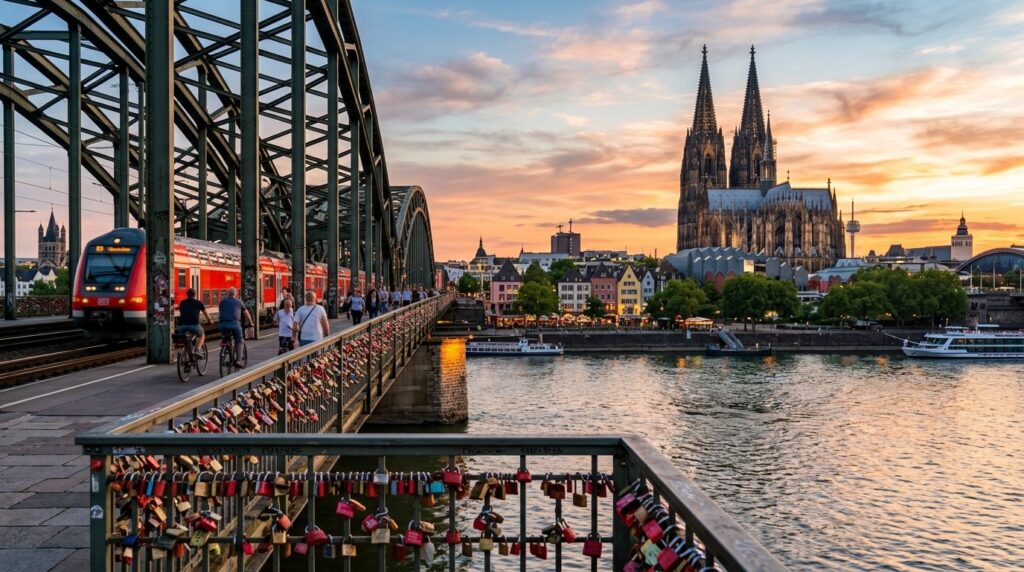
This UNESCO World Heritage Site took over 600 years to complete. Its twin spires dominate the skyline, and climbing to the top rewards you with sweeping views. Consequently, it’s one of the most visited landmarks in all of Germany.
Old Town Cologne
The Altstadt, or old town, sits right along the Rhine River. Here, you’ll find colorful houses, cozy breweries, and the famous Kolsch beer. Similarly, the Chocolate Museum nearby makes a fun stop for families.
Frankfurt – Skyscrapers Meet Old-World Charm
Frankfurt often gets skipped, but it shouldn’t be. This financial hub has a skyline that rivals any major global city. Yet its old town still holds onto centuries of history.
Skyline Views
The Main Tower offers one of the best observation decks in the city. From there, you can see the entire skyline stretched out below. Meanwhile, a river cruise along the Main gives a different perspective entirely.
Romerberg Square
Romerberg is Frankfurt’s historic central square. Its half-timbered buildings look like something out of a storybook. For instance, the Christmas market held here each December is one of the oldest in Germany.
Dresden – The Florence of the North
Dresden earned its nickname thanks to its stunning Baroque architecture. Rebuilt after World War II, the city now shines brighter than ever.
Frauenkirche
This church was destroyed in the war and later rebuilt using original stones where possible. Today, it stands as a symbol of reconciliation and resilience. Visitors often say it’s one of the most moving sights in Germany.
Zwinger Palace
The Zwinger Palace complex houses several art galleries and museums. Its courtyard gardens are beautiful, especially in spring. Overall, Dresden deserves at least two full days to explore properly.
Heidelberg – A Fairytale University Town
Heidelberg feels like a storybook come to life. Its combination of castle ruins, a winding river, and a lively student population creates a special atmosphere.
Heidelberg Castle
Perched above the city, the castle offers dramatic ruins and sweeping views of the Neckar River. Furthermore, the castle grounds include one of the largest wine barrels in the world.
The Old Bridge
The Karl Theodor Bridge, known locally as the Old Bridge, connects the old town to scenic hiking trails. Crossing it at sunset is a memory you won’t forget.
The Romantic Road – Germany’s Most Scenic Drive
The Romantic Road stretches across Bavaria, linking small medieval towns. It’s one of Germany’s most popular scenic routes, and it’s easy to see why.
Rothenburg ob der Tauber
This walled town looks frozen in time. Cobblestone streets, timber-framed houses, and a complete city wall make it feel like a movie set. As a result, it’s one of the most photographed towns in the country.
Wurzburg
Wurzburg offers the stunning Wurzburg Residence, a UNESCO-listed palace. Additionally, the surrounding vineyards produce some of Germany’s best white wine. This makes Wurzburg a favorite among the best places to visit in Germany for wine lovers.
Neuschwanstein and the Bavarian Alps
No list of Germany’s top sights is complete without this fairytale castle. Set against a mountain backdrop, it looks almost too perfect to be real.
Neuschwanstein Castle
Built by King Ludwig II, this castle inspired Disney’s Sleeping Beauty Castle. Tours take you through opulent rooms and reveal the king’s eccentric vision. Booking tickets in advance is essential, since this spot draws huge crowds.
Garmisch-Partenkirchen
This alpine town sits near Germany’s highest peak, the Zugspitze. In winter, it’s a popular ski destination. In summer, hikers flock here for its trails and mountain scenery.
The Black Forest – Nature and Folklore
The Black Forest, or Schwarzwald, is exactly what fairy tales are made of. Dense woodlands, thatched-roof cottages, and quiet lakes define this region.
Freiburg
Freiburg is a sunny university city known for its eco-friendly lifestyle. Small canals, called Bachle, run through the streets. Locals say stepping in one means you’ll marry a local, so watch your step.
Triberg and Cuckoo Clocks
Triberg is famous for its waterfalls and its cuckoo clocks. In fact, this region is considered the birthplace of the cuckoo clock. You can visit workshops and see how these intricate pieces are made.
Lake Constance – Germany’s Sunny Lakeside Escape
Lake Constance, or Bodensee, borders Germany, Switzerland, and Austria. Its mild climate makes it one of the sunniest spots in the country.
Konstanz
Konstanz sits right on the lake and offers a relaxed, beachy vibe rare for Germany. Additionally, its old town survived World War II almost untouched, so the architecture feels remarkably authentic.
Meersburg
Meersburg features a hilltop castle and charming lakeside promenade. It’s smaller than Konstanz, but no less charming. Many visitors consider it one of the prettiest towns on the lake.
The Rhine Valley – Castles and Vineyards
The Rhine River winds through steep vineyards and dozens of medieval castles. A boat cruise here is one of the most scenic experiences in Germany.
Rudesheim
Rudesheim is known for its wine culture and its famous Drosselgasse street, lined with taverns and live music. Meanwhile, a cable car ride above the vineyards offers incredible valley views.
Marksburg Castle
Marksburg is one of the few Rhine castles never destroyed. Consequently, it offers an authentic look at medieval fortress life. Guided tours take you through armories, kitchens, and towers.
FAQs
What are the best places to visit in Germany for first-time travelers?
Berlin, Munich, and the Rhine Valley make excellent starting points. They offer a strong mix of history, culture, and scenery, which gives first-time visitors a well-rounded introduction to the country.
What is the best time of year to visit Germany?
Spring and fall offer mild weather and smaller crowds. However, winter is ideal if you want to experience the famous Christmas markets.
How many days do you need to see Germany’s top sights?
Most travelers need at least 10 to 14 days to cover the major cities and a few smaller towns. For instance, a two-week trip allows time for Berlin, Munich, the Romantic Road, and a castle or two.
Is Neuschwanstein Castle worth visiting?
Yes, it’s widely considered one of the most beautiful castles in the world. Booking tickets in advance is strongly recommended due to high demand.
Is Germany expensive to visit?
Germany is moderately priced compared to other Western European countries. Public transport, food, and accommodation are generally more affordable than in France or the UK.
Conclusion
Germany offers something for every kind of traveler. From the buzzing streets of Berlin to the fairytale towers of Neuschwanstein, the best places to visit in Germany span history, nature, and culture in equal measure. Additionally, hidden gems like Bamberg and Quedlinburg prove there’s always more to discover.
If you’re planning a trip in 2026, don’t just stick to the big cities. Instead, mix in a few smaller towns and let yourself wander. Germany rewards curious travelers, and this list is a great place to start your journey.
Read more: 25 Best Places to Visit in Canada in 2026 (Ultimate Travel Guide)

Maaz Khan is the founder and lead writer at TheTrailova, where he shares travel guides, hidden gems, and practical tips for beach getaways, luxury escapes, and family adventures around the world. When he’s not planning his next trip, he’s researching the details that make travel easier for others.