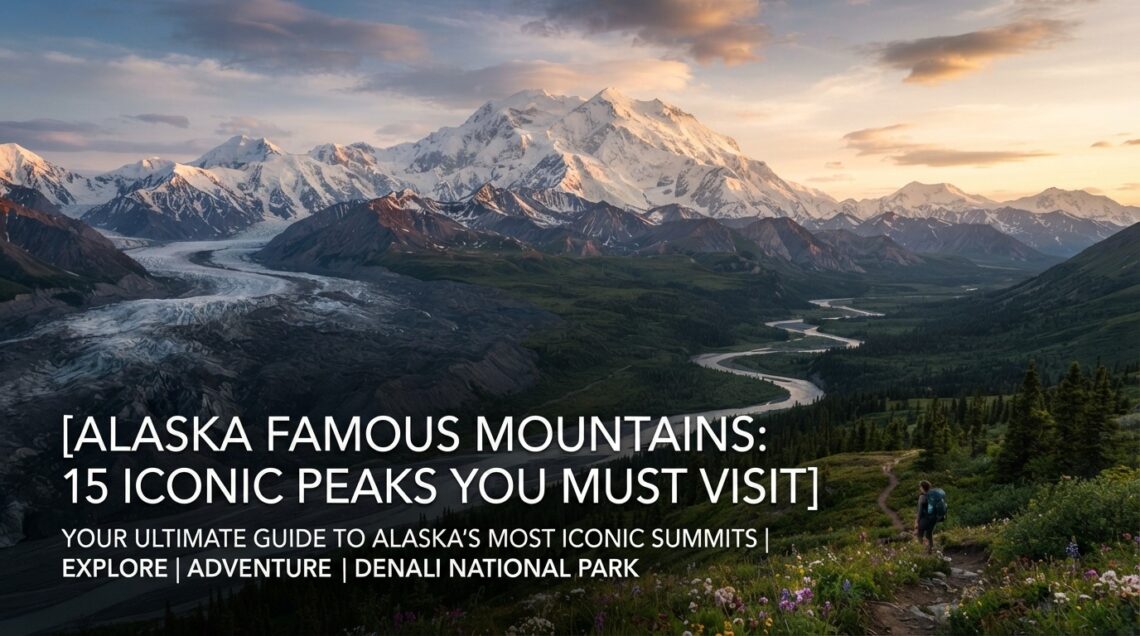
Alaska does not do anything small. The state’s mountains rise straight out of glaciers, oceans, and tundra, creating some of the most dramatic scenery on Earth. If you love wild landscapes, Alaska famous mountains belong at the top of your travel list.
From the tallest peak in North America to smoking volcanoes on the coast, this guide walks you through 15 unforgettable summits. Whether you plan to climb, fly over, or simply photograph them from a lodge window, these mountains will change how you see the Last Frontier. Let’s explore them one by one.
What Makes Alaska’s Mountains So Iconic
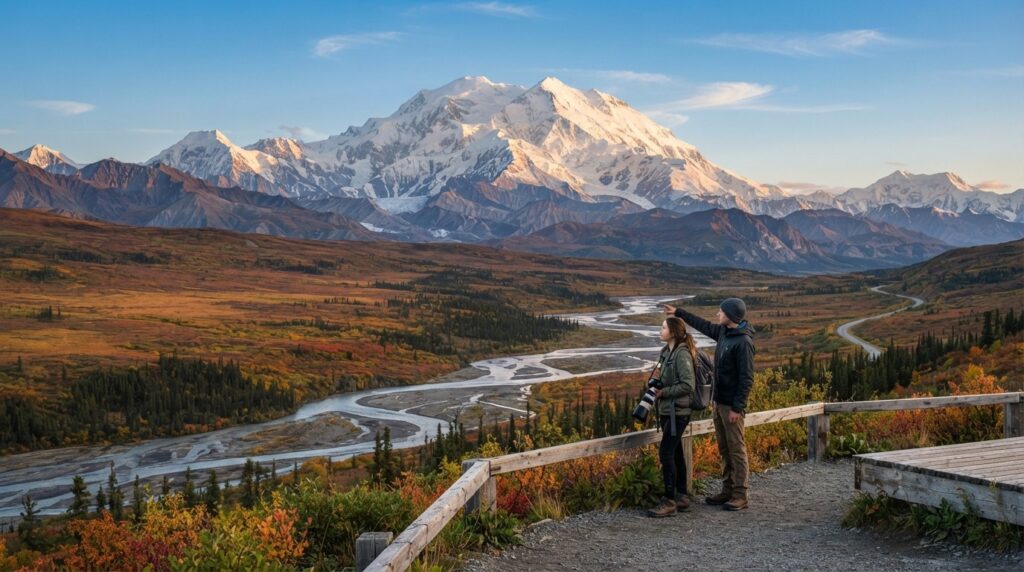
Alaska’s mountains are not just tall. They are wild, remote, and often surrounded by glaciers that stretch for miles. As a result, they feel different from peaks in other parts of the world.
Many of these summits also sit within national parks or preserves. Therefore, wildlife, glaciers, and untouched forests usually come as part of the package.
A Land Shaped by Ice and Fire
Alaska sits along the Pacific Ring of Fire. Consequently, many of its most famous mountains are volcanoes, not just granite giants. This mix of glaciers and volcanic activity creates a landscape unlike anywhere else in the United States.
A Playground for Every Type of Traveler
You do not need to be a mountaineer to enjoy these peaks. For instance, scenic flights, day hikes, and national park drives let casual travelers experience the same views as climbers. In addition, many lodges offer front-row seats to these giants.
Denali – The Tallest Peak in North America
No list of Alaska famous mountains can start anywhere else. Denali rises to roughly 20,310 feet, making it the highest mountain on the continent. Its name comes from the Koyukon language and means “the tall one” or “the great one.”
Denali sits inside Denali National Park and Preserve, about 130 miles north of Anchorage. Meanwhile, its massive size creates its own weather, which can change in minutes.
Best Ways to See Denali
Most visitors view Denali from park buses or the popular Park Road. However, flightseeing tours offer a closer look, including glacier landings on clear days. Similarly, the Wonder Lake area provides one of the best reflection views in the park.
Climbing Denali
Only experienced mountaineers should attempt a summit climb. The West Buttress Route remains the most common path. Even so, only about half of all climbers reach the top each year, since weather and altitude sickness stop many attempts.
Mount Foraker – Denali’s Majestic Neighbor
Just 14 miles from Denali stands Mount Foraker, the third-highest peak in Alaska. It reaches about 17,400 feet and shares the same national park. Indigenous names for the mountain include “Sultana,” meaning “the woman,” which reflects its close bond with Denali.
Mount Foraker often gets overlooked. Nevertheless, its steep ridgelines and glacier-carved slopes make it one of the most photogenic peaks in the Alaska Range.
A Mountain for Serious Climbers
Foraker is considered more technical than Denali in several respects. As a result, it attracts fewer climbers but earns great respect among mountaineers. The first ascent happened in 1934, and routes remain challenging today.
Where to View It
Many of the same viewpoints used for Denali also frame Foraker beautifully. For example, the Eielson Visitor Center offers wide views of both peaks together on a clear day.
Mount Saint Elias – Alaska’s Coastal Giant
Mount Saint Elias rises about 18,008 feet, making it the second-highest peak in the United States. Unlike Denali, it sits close to the coast, near the Alaska-Yukon border. This location creates a dramatic rise from sea level to summit in a very short distance.
The mountain sits within Wrangell-St. Elias National Park, the largest national park in the country. Therefore, the surrounding wilderness feels almost endless.
One of the World’s Steepest Rises
Few mountains climb from ocean to summit as quickly as Saint Elias. Specifically, it rises nearly 18,000 feet within about 20 miles of the coastline. This creates intense weather and heavy snowfall year-round.
Getting a Glimpse
Cruise passengers sailing along the Gulf of Alaska sometimes catch views of Saint Elias on clear days. In contrast, most land travelers need a flightseeing tour, since roads do not reach this remote corner of the state.
Mount Bona – America’s Highest Volcano
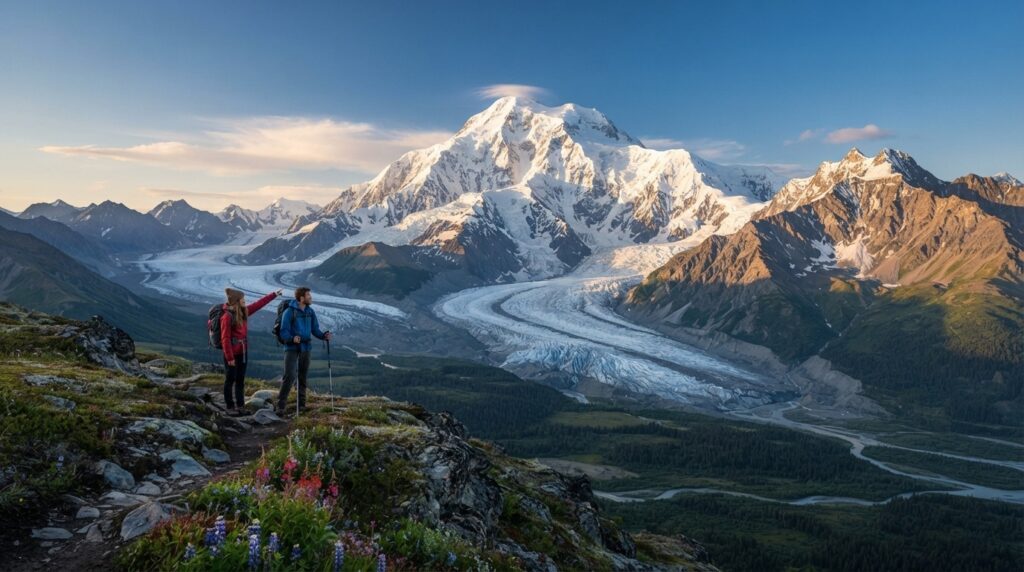
Mount Bona reaches about 16,550 feet and holds a unique title. It is the highest volcano in the United States. Located in the Saint Elias Mountains, Bona sits within the UNESCO-listed Wrangell-St. Elias National Park.
Although covered in snow and ice, Bona remains a true stratovolcano beneath its glacial coat.
Twin Peaks and Icefields
Mount Bona sits near Mount Churchill, and together they form a striking pair. Glaciers blanket both mountains almost entirely. Consequently, the area feeds the massive Klutlan Glacier below.
Access and Exploration
Reaching Bona requires serious planning, usually by ski plane. However, the reward is total solitude in one of Alaska’s most remote wilderness areas.
Mount Blackburn – The Wrangell Mountains’ Icy Crown
Mount Blackburn stands around 16,390 feet, making it the highest peak in the Wrangell Mountains. It is also a shield volcano, though long extinct. Its massive, glacier-covered form dominates the skyline of Wrangell-St. Elias National Park.
Many travelers spot Blackburn from the town of McCarthy or the historic Kennecott Mine, both popular stops in the region.
A Glacier-Covered Landmark
Blackburn’s summit hides beneath the Kennicott Glacier system. As a result, the mountain feeds one of Alaska’s most studied glaciers, which stretches for miles below.
Visiting Nearby McCarthy and Kennecott
The nearby ghost town of Kennecott offers a rich mining history alongside incredible mountain views. Meanwhile, McCarthy serves as a charming base for hikers exploring the surrounding wilderness.
Mount Sanford – A Perfectly Symmetrical Volcano
Mount Sanford rises about 16,237 feet and is known for its smooth, cone-like shape. This shield volcano sits within Wrangell-St. Elias National Park as well. Its symmetry makes it one of the most recognizable Alaska famous mountains from a distance.
Unlike jagged peaks nearby, Sanford’s rounded profile stands out clearly on the horizon.
Why Sanford Looks So Different
Sanford formed as a shield volcano, which explains its gentle slopes. Therefore, it looks more like a giant dome than a sharp summit. This shape also makes it a relatively approachable climb for experienced mountaineers.
Photography Tips
Sunrise and sunset light up Sanford’s slopes in soft gold and pink tones. For the best shots, aim for early morning along the Richardson Highway, where clear views often appear.
Mount Fairweather – Beauty Above Glacier Bay
Mount Fairweather reaches roughly 15,325 feet and lives up to its name only occasionally. Clouds often hide its summit, so clear views feel like a special reward. It rises within Glacier Bay National Park and Preserve, along the southeastern coast.
Despite the name, weather here is rarely calm. However, when skies clear, the view is unforgettable.
The Name Behind the Mountain
Captain James Cook named the mountain in 1778, hoping for fair weather during his voyage. Ironically, the region sees frequent storms and heavy precipitation throughout the year.
Best Spot for Viewing
Cruise ships touring Glacier Bay offer some of the easiest views of Fairweather. Additionally, kayakers paddling the bay sometimes catch stunning reflections on calm mornings.
Mount Hubbard – A Border-Straddling Wonder
Mount Hubbard stands about 14,951 feet tall and sits directly on the Alaska-Yukon border. This glacier-covered giant belongs to the Saint Elias Mountains. It remains one of the lesser-known Alaska famous mountains, yet it holds real significance for climbers.
Hubbard Glacier, one of Alaska’s most famous tidewater glaciers, takes its name from this same mountain range.
A Quiet Giant
Because of its remote location, Hubbard sees far fewer visitors than Denali or Saint Elias. Nevertheless, its towering ice fields make it a favorite among backcountry mountaineers.
Connection to Hubbard Glacier
Many cruise itineraries include a stop at Hubbard Glacier. Although the mountain itself sits farther inland, the glacier offers travelers a taste of the same dramatic landscape.
Mount Hunter (Begguya) – Denali’s Fierce Neighbor
Mount Hunter, known locally as Begguya, rises about 14,573 feet within Denali National Park. It sits just eight miles south of Denali. Although shorter than its famous neighbor, Hunter has a reputation as one of the most technically demanding climbs in Alaska.
Its steep faces and unpredictable weather challenge even seasoned mountaineers.
A Climber’s Test
Many experts consider Hunter harder to climb than Denali itself. Specifically, its ridgelines require advanced ice and snow skills. As a result, fewer climbers attempt it each season.
Viewing from the Park
Travelers touring Denali National Park often spot Hunter alongside Denali and Foraker. Together, these three peaks create one of the most photographed mountain clusters in the state.
Mount Marcus Baker – Chugach Range’s Highest Point
Mount Marcus Baker reaches about 13,176 feet, making it the tallest peak in the Chugach Mountains. It sits close to Anchorage, which makes it more accessible than many other Alaska famous mountains.
Its glaciers feed into the Prince William Sound region, an area popular for sea kayaking and wildlife viewing.
A Peak Near the City
Unlike remote giants such as Saint Elias, Marcus Baker sits within a few hours of Anchorage. Therefore, it appeals to climbers who want a big mountain experience without a long expedition.
Wildlife and Glaciers Nearby
The surrounding Chugach range hosts bears, mountain goats, and Dall sheep. In addition, nearby glaciers offer excellent day-hiking and photography opportunities for visitors.
Iliamna Volcano – A Steaming Beauty
Iliamna Volcano rises about 10,016 feet on the Alaska Peninsula. Steam vents near its summit remind visitors that this mountain remains active. It overlooks Cook Inlet and Lake Clark National Park, offering striking views across the water.
Although smaller than Denali, Iliamna’s steady steam plumes make it one of Alaska’s most distinctive volcanic peaks.
An Active Reminder
Iliamna has not erupted in recorded history. However, frequent steam and gas emissions show that activity continues beneath the surface.
Visiting Lake Clark National Park
Lake Clark National Park offers stunning views of Iliamna alongside excellent bear viewing. Consequently, many travelers combine both experiences in a single trip.
Mount Redoubt – An Active Volcano with Stunning Views
Mount Redoubt stands about 10,197 feet and last erupted in 2009. It sits within Lake Clark National Park, directly across Cook Inlet from Anchorage. On clear days, residents can see its snow-capped summit from the city itself.
Redoubt remains one of the most closely monitored volcanoes in Alaska due to its eruption history.
A Volcano Anchorage Can See
Few cities offer a direct view of an active volcano. However, Anchorage does, and Redoubt’s silhouette often appears in local photography and postcards.
Eruption History
Redoubt has erupted several times since the 1900s. As a result, scientists continue tracking seismic activity to protect nearby air traffic and communities.
FAQs
What is the most famous mountain in Alaska?
Denali is the most famous mountain in Alaska. It is also the tallest peak in North America, rising to about 20,310 feet.
How many named mountains are in Alaska?
Alaska has thousands of named mountains. Estimates suggest more than 3,800 peaks carry official names across the state.
Can beginners hike any of these mountains?
Yes, several areas near these peaks offer beginner-friendly trails. For example, Denali National Park has easy day hikes with excellent mountain views.
Do you need a permit to climb Denali?
Yes, climbers need a permit from the National Park Service. Registration must happen at least 60 days before a planned summit attempt.
Which Alaska mountains are volcanoes?
Several famous peaks are volcanoes, including Mount Bona, Mount Sanford, Mount Redoubt, Iliamna, and Mount Veniaminof.
What is the best way to see Alaska’s mountains without climbing?
Flightseeing tours offer the easiest way to view these peaks up close. Additionally, national park drives and cruise routes provide excellent scenic access.
Conclusion
Alaska famous mountains offer something for every type of traveler. From Denali’s record-breaking height to Veniaminof’s steaming caldera, each peak tells its own story of ice, fire, and wilderness. Whether you plan a scenic flight, a national park visit, or a serious climb, these mountains will leave a lasting impression.
So, start planning your Alaska adventure today. Pick one peak, or better yet, plan a route that lets you see several of these giants in a single unforgettable trip.
Read more: 10 Best Luxury Family Beach Resorts for an Unforgettable Vacation (2026 Guide)

Maaz Khan is the founder and lead writer at TheTrailova, where he shares travel guides, hidden gems, and practical tips for beach getaways, luxury escapes, and family adventures around the world. When he’s not planning his next trip, he’s researching the details that make travel easier for others.